பொருத்த நாணய வர்த்தகத்தில் உயர்ந்த அதிர்வுத்தன்மை மிகவும் தவறாகப் புரிந்துகொள்ளப்படும் சந்தை நிலைகளில் ஒன்றாகும். பெரும்பாலான வர்த்தகர்கள் வேகமாக நகரும் விலை இயக்கத்தைக் கண்டவுடன் உறைந்து போகிறார்கள் அல்லது மிக அதிகமாக முன்னெடுத்து, தவிர்க்கக்கூடிய இழப்புகளைச் சந்திக்கிறார்கள். அதிர்வான நிலைகளில் வர்த்தகம் செய்வது, அதிர்வுத்தன்மை விலை நடத்தை மீது என்ன தாக்கம் செலுத்துகிறது, உங்கள் ஆபத்தை எவ்வாறு சரிசெய்வது, சந்தைகள் வேகமாக நகரும் போது உங்கள் முடிவெடுப்பை எவ்வாறு தெளிவாக வைத்திருக்க வேண்டும் என்பவற்றை நீங்கள் புரிந்துகொண்டால் நிர்வகிக்கக்கூடியதாக இருக்கும்.
உயர் அதிர்வுத்தன்மை உண்மையில் என்ன அர்த்தம்
அதிர்வுத்தன்மை என்பது வெறும் “வேகமான சந்தை” அல்ல. இது ஒரு குறிப்பிட்ட காலப்பகுதியில் ஒரு நாணய ஜோடி தனது சராசரி விலையிலிருந்து எவ்வளவு விலகுகிறது என்பதற்கான அளவாகும். அதிர்வுத்தன்மை உயர்ந்திருக்கும்போது, நாளுக்குள் விலை வரம்புகள் பெருகுகின்றன, ஸ்ப்ரெட்கள் விரிவடைகின்றன, ஸ்டாப்கள் அதிகமுறை தாக்கப்படுகின்றன, மேலும் விலை குறைந்த எச்சரிக்கையுடன் முக்கிய தொழில்நுட்ப நிலைகளை உடைத்துச் செல்லலாம்.
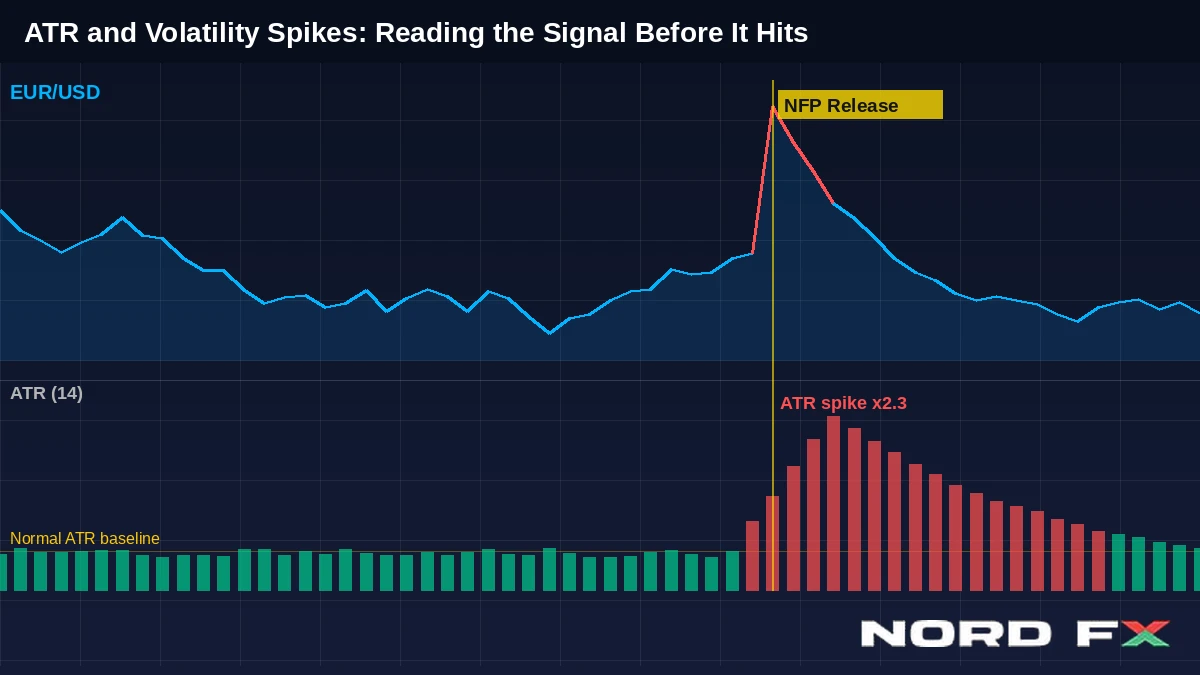
Average True Range (ATR) இதை அளவிடுவதற்கான மிகவும் நடைமுறையான கருவியாகும். ATR ஒரு குறிப்பிட்ட காலத்தில் — பொதுவாக 14 பார்கள் — ஒரு மெழுகுவர்த்தியின் அதிகபட்சம் மற்றும் குறைந்தபட்சம் இடையிலான சராசரி தூரத்தை கணக்கிடுகிறது. ATR உயர்ந்து கொண்டிருக்கும்போது, வரம்புகள் விரிவடைகின்றன. EUR/USD வழக்கமாக ஒரு நாளுக்கு 60 பிப்ஸ் ATR கொண்டிருந்தும், இன்று அது 140 எனக் காணப்பட்டால், நீங்கள் வழக்கத்தை விட இருமடங்குக்கும் அதிகமாக அதிர்வான நிலைகளில் செயல்படுகிறீர்கள். நீங்கள் நம்பும் ஒவ்வொரு ஆபத்து அளவுருவும் — ஸ்டாப் இடமமைப்பு, லாட் அளவு, டேக்-ப்ராஃபிட் தூரம் — அந்த விரிவடைந்த நிலைமையைப் பொருந்துமாறு மீளச் சரிசெய்யப்பட வேண்டும்.
அதிர்வுத்தன்மை அதிகரிக்கும் போது ஸ்ப்ரெட்களும் விரிவடைகின்றன; இதனால் செயல்படுத்தல் துல்லியம் மிக முக்கியமான தருணத்தில் ஒவ்வொரு வர்த்தகத்தின் உண்மைச் செலவு அதிகரிக்கிறது. ஒவ்வொரு கருவிக்கும் உள்ள ஸ்ப்ரெட்கள் மற்றும் செயல்படுத்தல் அளவுருக்களை NordFX வர்த்தகக் கணக்குகள் பக்கத்தில் பார்க்கலாம்.
அதிர்வுத்தன்மை ஏன் திடீரென உயர்கிறது
பொருத்த நாணய வர்த்தகத்தில் உயர் அதிர்வுத்தன்மைக்கு அனுபவமுள்ள வர்த்தகர்கள் முன்கூட்டியே எதிர்பார்க்க கற்றுக்கொள்ளும் அடையாளப்படுத்தக்கூடிய காரணங்கள் உள்ளன.
திட்டமிட்ட பொருளாதார வெளியீடுகள் மிகத் தொடர்ச்சியான இயக்கியாக உள்ளன. Non-Farm Payrolls, CPI தரவு, மத்திய வங்கி வட்டி விகித முடிவுகள், GDP வெளியீடுகள் அனைத்தும் கூர்மையான திசைமாற்றங்களைத் தூண்டுகின்றன. திசை எப்போதும் கணிக்க முடியாது; ஆனால் அதிர்வுத்தன்மை திடீர் உயர்வு பெரும்பாலும் கணிக்கக்கூடியதே. ஒவ்வொரு அமர்வுக்கும் முன் பொருளாதார நாட்காட்டியைச் சரிபார்ப்பது விருப்பம் அல்ல — அது அடிப்படைத் தேவையாகும்.
புவியியல் அரசியல் நிகழ்வுகள் வேறொரு வகை அதிர்வுத்தன்மையை உருவாக்குகின்றன: திட்டமிடப்படாத, திடீர், மற்றும் பெரும்பாலும் நீடித்த. ஒரு எதிர்பாராத பதற்ற உயர்வு அல்லது எதிர்பாராத கொள்கை அறிவிப்பு, பல நாட்களின் இயக்கத்தை ஒரே மணி நேரத்தில் சுருக்கி விடலாம். NordFX சந்தை பகுப்பாய்வு பிரிவு தினசரி கருத்துரைகளை வெளியிடுகிறது; இது வர்த்தகர்கள் சார்ட்களில் தாக்குவதற்கு முன் பெரிய பொருளாதார அபாயங்கள் எங்கு உருவாகின்றன என்பதை அடையாளம் காண உதவுகிறது.
மெல்லிய திரவத்தன்மை நேரங்கள் — திங்கள்கிழமை சந்தைத் திறப்பு, பெரிய பொது விடுமுறைகள், ஐரோப்பிய ஜோடிகளுக்கான தொடக்க ஆசிய அமர்வு — எந்த செய்தியையும் அதிகமான நகர்வுகளாக பெருக்குகின்றன. முக்கியக் கொள்கை: அதிர்வுத்தன்மை வருவதற்கு முன்பே அதை எதிர்பார்ப்பது உங்களைத் தயாராக இருக்கச் செய்கிறது. அது ஏற்கனவே திடீரென உயர்ந்த பிறகு பிரதிகரிப்பது உங்களை நிரந்தரமாக பின்தங்கச் செய்கிறது.
அதிர்வுத்தன்மை உயரும் போது நிலை அளவை எப்படி மாற்றுவது
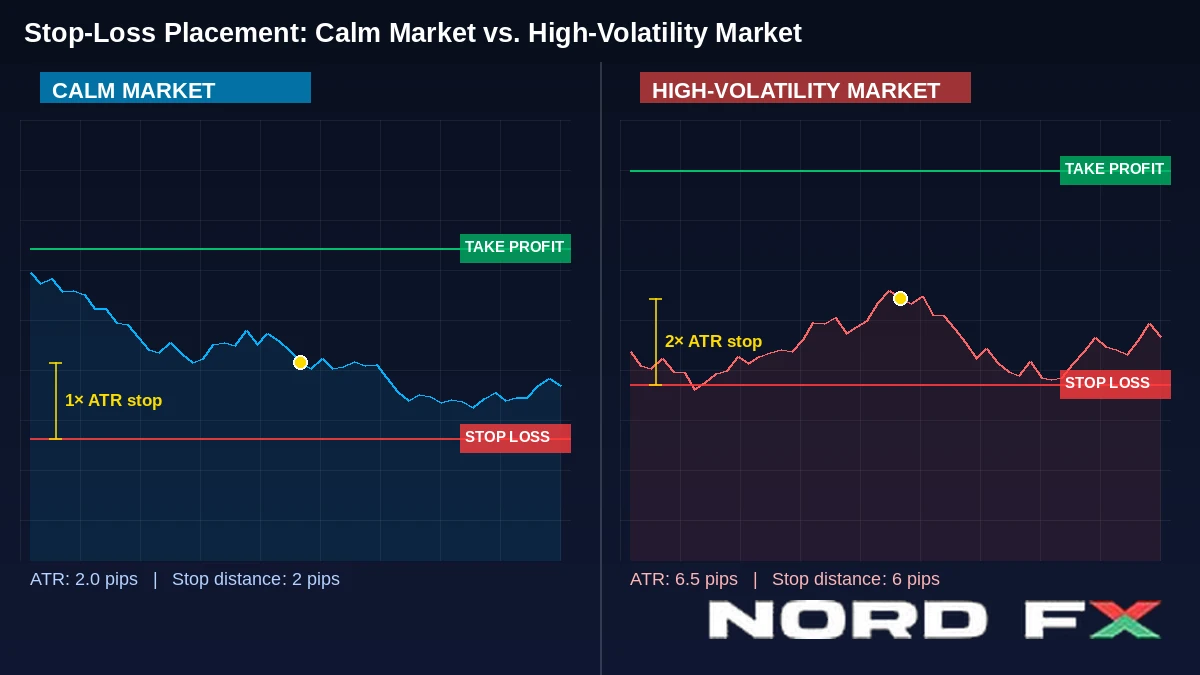
உயர் அதிர்வுத்தன்மை சூழலில் நிலை அளவிடல் மிகவும் முக்கியமான சரிசெய்தல் ஆகும். தர்க்கம் எளிதானது: ஒரு ஜோடியின் தினசரி வரம்பு இரட்டிப்பானால், உங்கள் சாதாரண தூரத்தில் வைத்த ஸ்டாப் ஆபத்தான அளவிற்கு நெருக்கமாகவோ அல்லது ஆபத்தான அளவிற்கு செலவாகவோ மாறும். இரண்டும் ஏற்றுக்கொள்ள முடியாதவை. அதிர்வுத்தன்மை பழக்கமாக அல்ல, இயக்கத்துடன் நிலை அளவை நிர்ணயிக்க வேண்டும்.
நடைமுறை முறை: ATR இன் ஒரு பலமடங்கு மதிப்பை வைத்து உங்கள் ஸ்டாப்-லாஸ் தூரத்தை கணக்கிடுங்கள், பின்னர் அந்த ஸ்டாப் மற்றும் உங்கள் நிலைநிறுத்திய ஆபத்து சதவீதத்தின் அடிப்படையில் லாட் அளவை நிர்ணயிக்கவும். ஒவ்வொரு வர்த்தகத்திலும் உங்கள் கணக்கு ஈக்விட்டியின் 1% ஆபத்தில் வைக்க வேண்டும் என்ற உங்கள் விதி இருந்தால், ATR அடிப்படையிலான ஸ்டாப் வழக்கத்தை விட இருமடங்கு அகலமாக இருந்தால், உங்கள் நிலை அளவும் சாதாரணத்தின் பாதியாக இருக்க வேண்டும். ஆபத்து நிலையாக இருக்கும். லாட் அளவு மாறும்.
இதன் பொருள், விலை வேகமாக நகரும் போது மற்றும் “நகர்வைப் பிடிக்க வேண்டும்” என்ற உந்துதல் அதிகமாக இருக்கும் போது, வசதியாகத் தோன்றுவதைவிட சிறிய அளவில் வர்த்தகம் செய்வதாகும். அந்த அசௌகரியமே இந்த விதி வர்த்தகத்திற்கு முன்பே அமைக்கப்பட வேண்டியது, நடுவே பேச்சுவார்த்தை செய்யப்படக் கூடாதது என்பதற்கான காரணம்.
அதிர்வான சந்தைகளில் ஸ்டாப்-லாஸ் இடமமைப்பு
தரமான ஸ்டாப் உத்திகள் அதிர்வான நிலைகளில் பெரும்பாலும் தோல்வியடைகின்றன; ஏனெனில் அவை வேகமான சந்தைகள் வழங்காத அளவிலான விலைத் துல்லியத்தை முன்னிட்டுக் கருதுகின்றன. இறுக்கமான ஸ்டாப்கள் சத்தத்தால் தாக்கப்படுகின்றன. அகலமான ஸ்டாப்கள் மிக அதிக மூலதனத்தை வெளிப்படுத்துகின்றன. குறிக்கோள் ஒரு சிறந்த ஸ்டாப் நிலையை கண்டுபிடிப்பது அல்ல — வர்த்தகக் கருத்து உண்மையில் முறியடையும் இடத்தில் ஸ்டாப் வைப்பதும், அதன்படி அளவைச் சரிசெய்வதும் ஆகும்.
அதிகரிக்கப்பட்ட நிலைகளில், அமைதியான சந்தையைவிட விலைக்கு அதிக இடம் கொடுப்பது என்பதைக் குறிக்கிறது. நுழைவு இடத்திலிருந்து குறைந்தபட்சம் 1.5× அல்லது 2× ATR ஐ ஒரு பாதுகாப்பு இடைவெளியாகப் பயன்படுத்தலாம். Trailing stops என்பது செய்தி நிகழ்வு கூர்மையான திசைமாற்றத்தை உருவாக்கும் போது, நீங்கள் சரியான நிலையில் இருந்தால் குறிப்பாக பயனுள்ளதாக இருக்கும் — அவை ஒரே மாற்றுத் திருப்பத்தில் முழு இலாபத்தையும் இழக்காமல், படிப்படியாக லாபத்தை பூட்ட உதவும். MetaTrader 4 மற்றும் MetaTrader 5 இல் open positions மீது trailing stops நேரடியாக அமைக்கலாம்; இரண்டும் NordFX platforms page வழியாக கிடைக்கின்றன.
மேலும், ரௌண்ட் எண்கள், தெளிவான தினசரி உச்சங்கள் மற்றும் தாழ்வுகள், அல்லது முந்தைய swing points ஆகிய இடங்களில் ஸ்டாப் வைப்பதைத் தவிர்க்கவும். அதிர்வான நிலைகளில், விலை பெரும்பாலும் இந்த நிலைகளை துடைத்துச் சென்று — குழுமப்பட்ட ஸ்டாப்களைத் தாக்கி — பின்னர் திரும்பும். உங்கள் ஸ்டாப்பை தெளிவான நிலைக்கு சில பிப்ஸ் அப்பால் வைப்பது, அந்த நகர்வுகளில் சிக்கிக்கொள்ளும் வாய்ப்பை குறைக்கும்.
எப்போது விலகி இருக்க வேண்டும்
உயர் தாக்கம் கொண்ட செய்தி வெளியீட்டுக்கு முன் மற்றும் உடனடியாக அதன் பின்னர் உள்ள நிமிடங்களில், ஸ்ப்ரெட்கள் கூர்மையாக விரிவடைகின்றன, slippage அதிகரிக்கிறது, மற்றும் ஆரம்ப விலைத் திடீர் உயர்வு/இறக்கம் பெரும்பாலும் விநாடிகளுக்குள் திரும்புகிறது. அந்த நேரத்தில் நுழைவு செய்வது, மீண்டும் மீண்டும் பயன்படுத்தக்கூடிய முன்னிலை அல்ல — முதல் tick இன் திசையில் பந்தயம் வைப்பதற்கே சமம்.
முக்கிய வெளியீட்டுக்குப் பிறகு 5 முதல் 15 நிமிடங்கள் காத்திருப்பது ஆரம்ப நகர்வின் ஒரு பகுதியைத் தியாகம் செய்யலாம்; ஆனால் செயல்படுத்தல் தரத்தை பெரிதும் மேம்படுத்தி, விரைவில் திரும்பும் ஒரு ஸ்பைக் காரணமாக ஸ்டாப் தாக்கப்படும் வாய்ப்பை குறைக்கிறது. அதே தர்க்கம் கடுமையான புவியியல் அரசியல் அநிச்சயத்திலும் பொருந்தும்: வெளிப்பாட்டைக் குறைத்து பக்கத்தில் இருந்து கவனிப்பது இழப்பு அல்ல — அது மூலதனப் பாதுகாப்பு.
அதிர்வான சந்தைகளின் உளவியல்
அதிர்வுத்தன்மை அமைதியான சந்தைகள் செய்யாத ஒன்றை மனித உளவியலில் செய்கிறது. அது அவசரத்தை உருவாக்குகிறது. செயல்படாமல் இருப்பது ஆபத்தானதாகவும், திடீர் நுழைவு அவசியமானதாகவும் உணரச் செய்கிறது. விலை எவ்வளவு வேகமாக நகருகிறதோ, அவ்வளவு தான் உடனடியாகச் செயல்பட வேண்டுமெனத் தோன்றும் — ஆனால் வேகமான சந்தைகள் திடீர் நுழைவுகளை மிகவும் கடுமையாக தண்டிக்கின்றன.
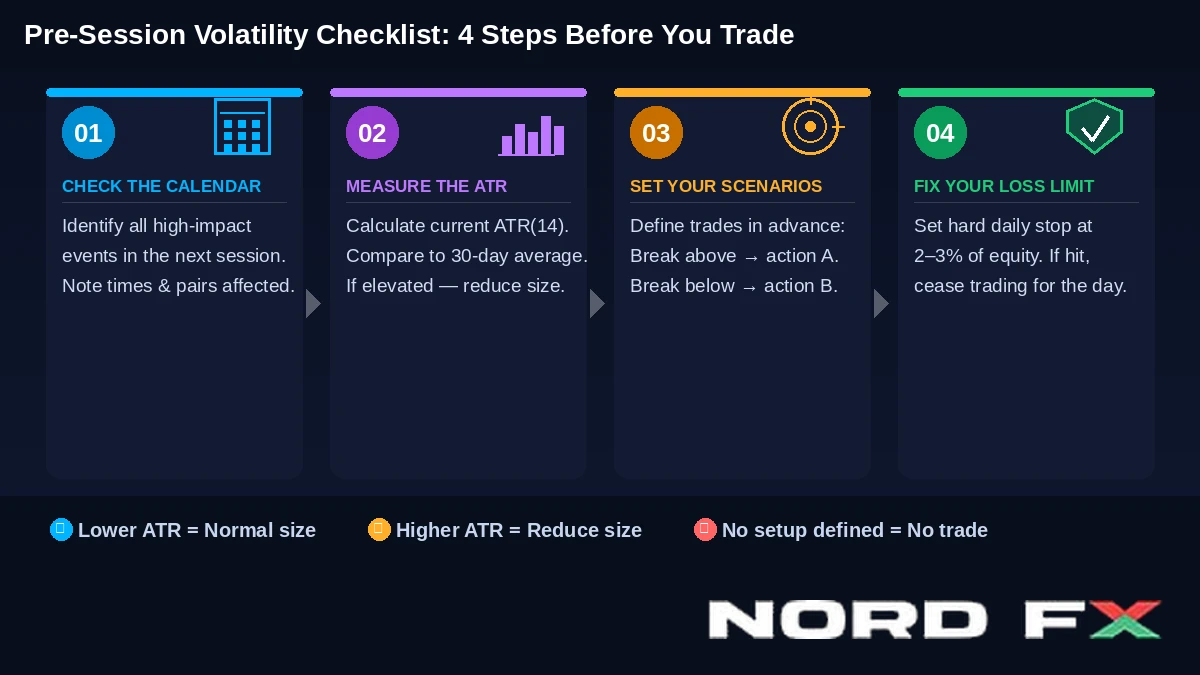
அதிர்வுத்தன்மை வருவதற்கு முன் உங்கள் சூழல்களை முன்கூட்டியே வரையறுக்கவும். ஒரு செய்தி திடீர் உயர்வின் போது நேரடி நேரத்தில் முடிவெடுப்பதற்குப் பதிலாக, விலை ஒரு நிலையை மேலே உடைத்தால் என்ன வர்த்தகம் என்பதை, மற்றும் கீழே உடைத்தால் என்ன என்பதை முன்கூட்டியே நிர்ணயிக்கவும். செயல்படுத்தல் ஒரு நிபந்தனை கட்டளையாக மாறுகிறது; பிரதிகிரியையான முடிவாக அல்ல.
கடுமையான தினசரி இழப்பு வரம்பை அமைக்கவும் — பொதுவாக ஈக்விட்டியின் 2% முதல் 3% வரை — அதன் பிறகு நிலைமைகள் எப்படியிருந்தாலும் வர்த்தகத்தை நிறுத்தவும். இது ஒரே ஒரு குழப்பமான அமர்வு முழுக் கணக்கில் அளவுக்கதிகமான தாக்கத்தை ஏற்படுத்துவதைத் தடுக்கிறது.
அநிச்சயமான காலங்களில் NordFX Trading Signals page மூலம் தொழில்முறை பகுப்பாய்வைப் பார்வையிடுவது ஒரு பயனுள்ள நிஜச் சோதனையாகவும் இருக்கும். உங்கள் உள்ளுணர்வு நன்றாக காரணம் கொண்ட பகுப்பாய்வுக்கு வலுவாக எதிராக இருந்தால், அந்த முரண்பாடு செயல்படுவதற்கு முன் ஆராயத் தக்கது. உயர் அதிர்வுத்தன்மை அமர்வுகளில் குறிக்கோள் மாதத்தின் மிகப்பெரிய வர்த்தகங்களைச் செய்வது அல்ல — உயிருடன் நிலைத்து, தெளிவான மனநிலையுடன் இருந்து, நிலைமை சாதாரணமாகும் போது பங்கேற்கத் தயாராக இருப்பதுதான்.
தவிர்க்க வேண்டிய பொதுவான தவறுகள்
ஒரு நகர்வில் மிக அதிக லெவரேஜ் பயன்படுத்துதல். விலை ஒரு வர்த்தகக் கருத்தை உறுதிப்படுத்தி வேகமாக நகரும் போது, இலாபத்தை அதிகப்படுத்த அளவை உயர்த்துவது கவர்ச்சிகரமாக இருக்கும். ஆனால் அதிர்வான நிலைகளில் அதிக லெவரேஜ் கொண்ட நிலைகள், இறுதியில் வர்த்தகக் கருத்து சரியாக இருந்தாலும் கூட மார்ஜின் காலுக்குக் காரணமாகலாம் — ஏனெனில் இலக்கு அடைய செல்லும் பாதையில், கணக்கு தாங்க முடியாத drawdown இருந்திருக்கும்.
இழக்கும் நிலைக்கு மேலும் சேர்த்தல். அதிர்வான நிலைகளில் தோல்வியடைந்த வர்த்தகத்தில் மேலும் சேர்ப்பது, நிர்வகிக்கக்கூடிய இழப்பை கடுமையான இழப்பாக மாற்றுவதற்கான மிக நம்பகமான வழிகளில் ஒன்றாகும். உயர் அதிர்வான நகர்வுகள் தர்க்கம் சொல்வதைவிட வெகுதூரம் நீளலாம்.
சந்தை “வேறுபடுகிறது” என்பதால் திட்டத்தை கைவிடுதல். அதிர்வான நிலைகள் அறிவாற்றல் குறுக்குவழிகளைத் தூண்டும். அமர்விற்கு முன் தெளிவாகச் சரியானதாக இருந்த அமைப்புகள் திடீரென சந்தேகமாக உணரப்படுகின்றன. பல வர்த்தகர்கள் முன்கூட்டியே வெளியேறுகிறார்கள் அல்லது நுழைவுகளை தவிர்க்கிறார்கள் — பின்னர் முதலில் வரையறுக்கப்பட்டபடியே நிகழ்ந்த சூழலைத் தாமும் இல்லாமல் பார்த்துக்கொண்டிருக்கிறார்கள். சந்தை அதிக ஒலியாகிறது என்பதால் திட்டம் குறைவான செல்லுபடியாக மாறாது.
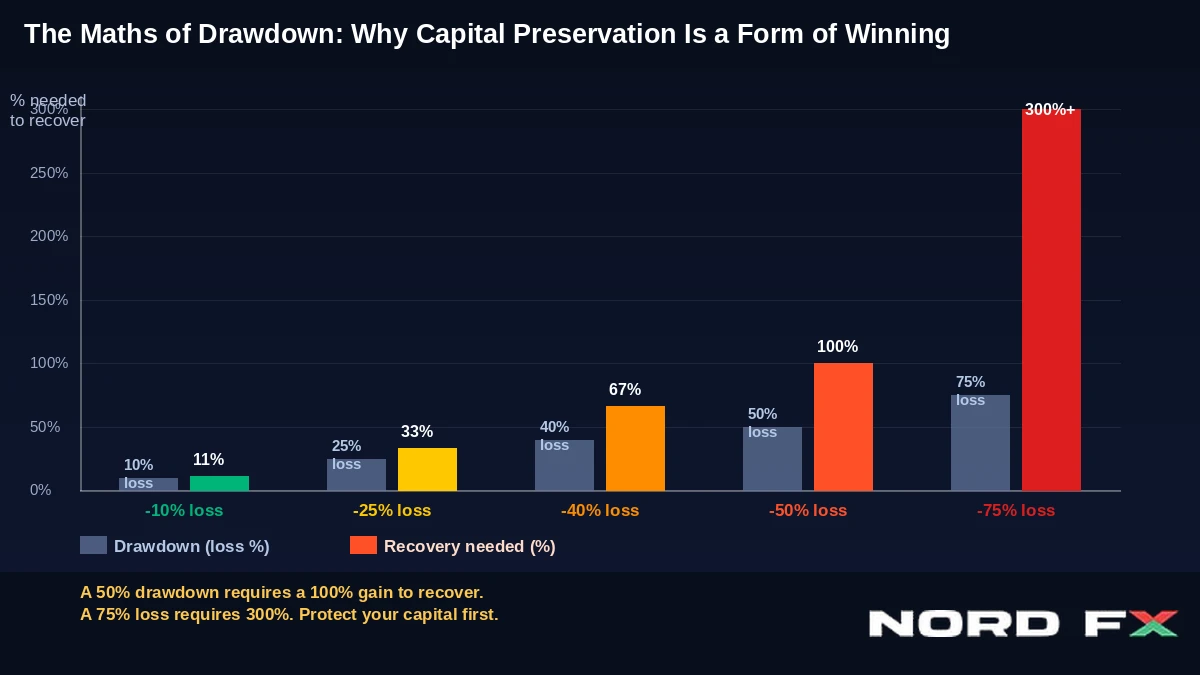
அமர்வுக்கு முன் நடைமுறைச் செயல்முறை
எந்த அதிர்வான அமர்வுக்கும் முன், உயர்தாக்கம் கொண்ட நிகழ்வுகளுக்கான பொருளாதார நாட்காட்டியைச் சரிபார்த்து, எந்த ஜோடிகள் பாதிக்கப்படுகின்றன என்பதைக் குறித்துக் கொள்ளுங்கள். தற்போதைய ATR ஐ கணக்கிட்டு, அதை 30 நாள் சராசரியுடன் ஒப்பிடுங்கள் — அது கணிசமாக உயர்ந்திருந்தால், ஒரு வர்த்தகத்தை வைப்பதற்கு முன் திட்டமிட்ட நிலை அளவை குறைக்கவும். அமர்வின் போது, முன்கூட்டியே வரையறுக்கப்பட்ட அமைப்புகளை மட்டுமே வர்த்தகம் செய்து, நடுவே கைமுறை மாற்றமின்றி ஸ்டாப் இடமமைப்புகளைப் பின்பற்றவும். முக்கிய செய்தி வெளியீட்டுக்குப் பிறகு, நுழைவதற்கு முன் நிலைபெற காத்திருக்கவும். அமர்வு முடிவில், தீர்ப்பின்றி திட்டத்துடன் செயல்படுத்தலைப் பரிசீலிக்கவும்.
உங்கள் அதிர்வுத்தன்மை சகிப்புத்தன்மை மற்றும் வர்த்தக பாணிக்கு எந்த கணக்கு வகை சிறந்தது என்பதை மதிப்பிடுகிறீர்கள் என்றால், NordFX accounts page அனைத்து கிடைக்கும் கணக்கு வகைகளிலும் ஸ்ப்ரெட்கள், லெவரேஜ் விருப்பங்கள், மற்றும் நிபந்தனைகளின் முழுமையான ஒப்பீட்டை வழங்குகிறது.
அடிக்கடி கேட்கப்படும் கேள்விகள்
உயர் அதிர்வுத்தன்மையில் முற்றிலும் வர்த்தகத்தைத் தவிர்க்க வேண்டுமா?
அவசியம் இல்லை. அதிர்வான நிலைகள் பொருத்த நாணய சந்தையின் மிகத் திசைமுகமான, ட்ரெண்ட் சார்ந்த நகர்வுகளில் சிலவற்றை உருவாக்குகின்றன. முக்கியமானது உங்கள் அணுகுமுறையைச் சரிசெய்வதுதான் — சிறிய அளவு, அகலமான ஸ்டாப்கள், பின்னர் நுழைவுகள் — சந்தையை முற்றிலும் தவிர்ப்பது அல்ல.
செய்தி நிகழ்வுகளின் போது எந்த ஜோடிகள் மிகவும் அதிர்வானவை?
EUR/USD, GBP/USD, மற்றும் USD/JPY ஆகியவை US தரவுகளுக்கு மிகவும் கூர்மையாகப் பிரதிபலிக்கின்றன. GBP குறுக்குவழி ஜோடிகள் UK வெளியீடுகள் மற்றும் Bank of England முடிவுகளுக்கு குறிப்பாக உணர்திறனாக உள்ளன. புவியியல் அரசியல் நிகழ்வுகளில், USD/CHF மற்றும் USD/JPY போன்ற பாதுகாப்பு-நாணய ஜோடிகள் மிகத் தெளிவான நகர்வுகளைக் காட்டுகின்றன.
லெவரேஜ் அதிர்வுத்தன்மையுடன் எப்படி தொடர்பு கொள்ளுகிறது?
லெவரேஜ் லாபங்களையும் இழப்புகளையும் இரண்டையும் பெருக்குகிறது. அதிர்வான நிலைகளில், அமைதியான சந்தையில் மணி நேரங்கள் எடுக்கும் எதிர்மறை நகர்வுகள் நிமிடங்களுக்குள் உங்கள் ஸ்டாப்பைத் தாக்கலாம். நிலை அளவை குறைப்பதும் — அதனால் பயனுள்ள லெவரேஜைக் குறைப்பதும் — முதன்மையான பாதுகாப்பு மாற்றமாகும்.
ஒரு செய்தி வெளியீட்டுக்குப் பிறகு உயர்ந்த அதிர்வுத்தன்மை எவ்வளவு நேரம் நீடிக்கும்?
மிகக் கூர்மையான நகர்வுகள் பொதுவாக முதல் 1 முதல் 5 நிமிடங்களுக்குள் நடைபெறும். உயர்ந்த வரம்புகள் மற்றும் வேகமான இயக்கம் பெரும்பாலும் 30 முதல் 60 நிமிடங்கள் நீடிக்கலாம். செய்தியாளர் சந்திப்புகளுடன் வரும் மத்திய வங்கி முடிவுகள் பல மணி நேரங்கள் அதிகரித்த அதிர்வுத்தன்மையைத் தக்கவைக்கலாம்.
ஆபத்து எச்சரிக்கை: CFDs வர்த்தகம் குறிப்பிடத்தக்க இழப்பு ஆபத்தை கொண்டுள்ளது. Forex மற்றும் CFD வர்த்தகம் அனைத்து முதலீட்டாளர்களுக்கும் பொருத்தமானதாக இருக்காது. கடந்த செயல்திறன் எதிர்கால முடிவுகளுக்கான குறியீடு அல்ல. இழக்கக்கூடிய மூலதனத்துடன் மட்டுமே எப்போதும் வர்த்தகம் செய்யுங்கள்.
திரும்பிச் செல்லவும் திரும்பிச் செல்லவும்