آخر تحديث: 29 يوليو 2026
ما هو وسيط البيتكوين (Bitcoin Broker)؟
وسيط البيتكوين هو شركة تتيح للعملاء تداول البيتكوين، عادةً من خلال عقود الفروقات (CFDs) أو مشتقات مالية أخرى، دون شراء العملة الرقمية وتخزينها فعليًا. وخلافًا لمنصة تداول العملات الرقمية، يوفر الوسيط عادةً تداولًا بالرافعة المالية ومنصات تداول وأدوات لإدارة المخاطر مثل أوامر وقف الخسارة (stop-loss) وجني الأرباح (take-profit).
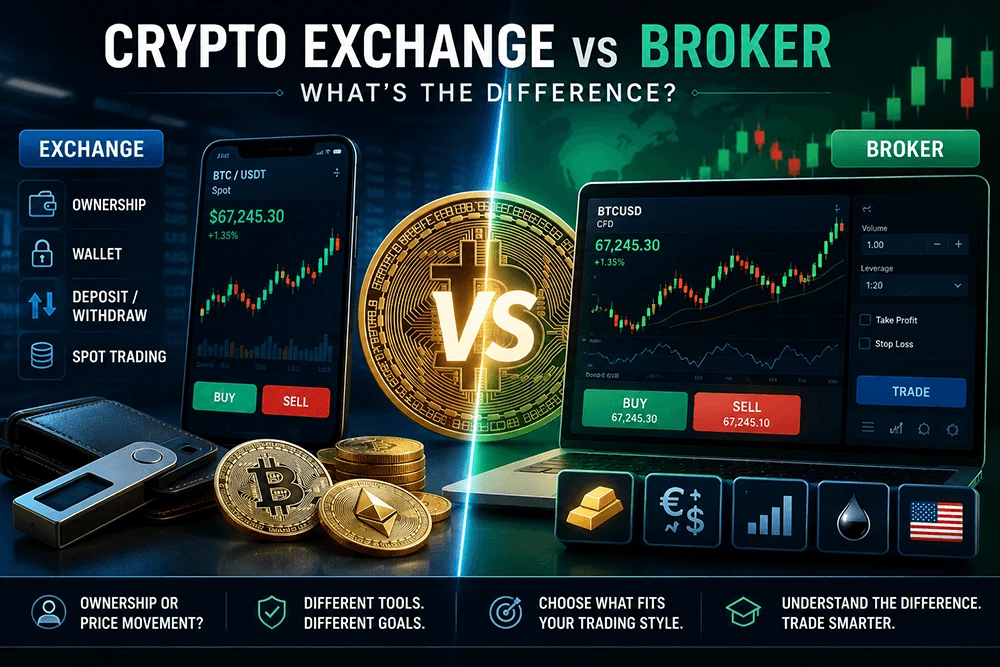
تداول العملات الرقمية عبر منصة تداول يتضمن عادةً شراء وامتلاك عملة رقمية فعلية، بينما يركز تداول العملات الرقمية عبر وسيط غالبًا على المضاربة على تحركات الأسعار دون امتلاك العملات الأساسية. تُصمَّم منصات التداول لملكية العملات الرقمية وتحويلها، بينما يوفر الوسطاء عمومًا أدوات تداول وخيارات رافعة مالية والوصول إلى أسواق متعددة.
تركز منصات التداول على الملكية والمحافظ والتحويلات، بينما يوفر الوسطاء عادةً أدوات تداول وخيارات رافعة مالية والوصول إلى أسواق متعددة من خلال منصات مثل ميتاتريدر 4 (MT4) وميتاتريدر 5 (MT5).
ما هي منصة تداول العملات الرقمية (Crypto Exchange)؟
منصة تداول العملات الرقمية هي سوق يمكن للمستخدمين من خلاله شراء العملات الرقمية وبيعها وتحويلها وتخزينها.
عند شراء البيتكوين عبر منصة تداول، فإنك عادةً تمتلك العملة الرقمية الفعلية ويمكنك تحويلها إلى محفظة أخرى أو استخدامها في معاملات البلوك تشين.
تشمل الأنشطة النموذجية على منصات التداول:
- شراء البيتكوين أو الإيثيريوم
- إيداع العملات الرقمية وسحبها
- الاحتفاظ بالأصول على المدى الطويل
- تحويل العملات بين المحافظ
ما هو وسيط العملات الرقمية (Crypto Broker)؟
وسيط العملات الرقمية هو شركة توفر الوصول إلى أسواق تداول العملات الرقمية.
وبدلًا من التركيز على ملكية العملات الرقمية، يتيح الوسطاء غالبًا للمتداولين تداول عقود الفروقات (CFD) والمضاربة على تحركات الأسعار. وحسب المنتج المُقدَّم، قد لا يحتاج المتداولون إلى إدارة المحافظ أو تحويلات البلوك تشين أو المفاتيح الخاصة.
يوفر العديد من الوسطاء أيضًا الوصول إلى أسواق أخرى مثل العملات والمعادن والمؤشرات والأسهم من حساب تداول واحد.
ما هو الفرق الرئيسي بين منصة التداول والوسيط؟
الفرق الرئيسي هو الملكية.
في منصة التداول، يشتري المتداولون عادةً العملة الرقمية التي يتداولونها ويمتلكونها.
أما من خلال الوسيط، فغالبًا ما يركز المتداولون على تحركات الأسعار بدلًا من ملكية الأصل نفسه. فقد تكون لديهم عملات رقمية في محفظتهم، لكنهم يتداولون عقود الفروقات الخاصة بالعملات الرقمية.
يؤثر هذا الاختلاف في كيفية إدارة المتداولين لمراكزهم وتحويل أموالهم واستخدام أدوات التداول.
جدول مقارنة بين منصة تداول العملات الرقمية والوسيط
الميزة | منصة تداول العملات الرقمية | وسيط العملات الرقمية |
ملكية العملات الرقمية | عادةً نعم | غالبًا لا |
الحاجة إلى محفظة | عادةً نعم | عادةً لا |
تحويلات البلوك تشين | متاحة | غير مطلوبة عادةً |
التركيز | الملكية والتحويلات | المضاربة على الأسعار |
الرافعة المالية | تختلف | متوفرة غالبًا |
الوصول إلى أصول متعددة | عادةً عملات رقمية فقط | غالبًا يشمل فئات أصول متعددة |
منصات التداول | واجهة منصة التداول | MT4، MT5، منصات ويب |
مناسب لـ | المستثمرون وحاملو الأصول | المتداولون النشطون |
هل تمتلك العملة الرقمية عند التداول عبر وسيط؟
في العديد من منتجات عقود فروقات العملات الرقمية، يضارب المتداولون على تحركات الأسعار بدلًا من شراء العملات الفعلية.
على سبيل المثال، يمكن للمتداول فتح مركز BTCUSD والاستفادة المحتملة من ارتفاع الأسعار أو انخفاضها دون إدارة محفظة عملات رقمية.
قد يروق هذا الأسلوب للمتداولين المهتمين أساسًا بتحركات السوق والربح منها بدلًا من ملكية العملة الرقمية.
عقود الفروقات على العملات الرقمية مقابل التداول الفوري للعملات الرقمية
من أبرز الفروقات بين الوسطاء ومنصات التداول هو نوع المنتج المتداول.
تركز معظم منصات التداول على التداول الفوري للعملات الرقمية، حيث يشتري المستخدمون العملات الفعلية ويمتلكونها. ويقدم العديد من الوسطاء عقود فروقات على العملات الرقمية، والتي تتيح للمتداولين المضاربة على تحركات الأسعار دون امتلاك العملة الرقمية الأساسية.
الميزة | التداول الفوري للعملات الرقمية | عقود الفروقات على العملات الرقمية |
الملكية | نعم | لا |
الحاجة إلى محفظة | عادةً نعم | لا |
تحويلات البلوك تشين | نعم | لا |
المراكز الشرائية (Long) | نعم | نعم |
المراكز البيعية (Short) | محدودة غالبًا | متاحة عادةً |
الرافعة المالية | محدودة أو معدومة | متوفرة غالبًا |
مسؤولية التخزين | المستخدم | غير مطلوبة |
الهدف الرئيسي | الملكية والاستثمار | تداول تحركات الأسعار |
يمكن أن يساعد فهم هذا الفرق المتداولين على اختيار الحل الأنسب لأهدافهم.
ما هي مزايا تداول العملات الرقمية عبر منصة تداول؟
قد تكون منصات التداول مناسبة للمستخدمين الراغبين في امتلاك العملات الرقمية مباشرةً.
تشمل المزايا المحتملة:
- امتلاك الأصل الأساسي
- القدرة على تحويل العملات بين المحافظ
- الوصول إلى الأنشطة القائمة على البلوك تشين
- استراتيجيات الاحتفاظ طويل الأمد
✅ لكن منصات تداول العملات الرقمية تتعرض أحيانًا للاختراق، مما قد يؤدي إلى سرقة أموال المستخدمين.
ما هي مزايا تداول العملات الرقمية عبر وسيط؟
قد يكون الوسطاء مناسبين للمتداولين الذين يركزون على فرص السوق بدلًا من ملكية الأصول.
تشمل المزايا المحتملة:
- عدم الحاجة إلى إدارة محفظة
- الوصول إلى منصات تداول مثل MT4 وMT5
- القدرة على تداول فئات أصول متعددة من حساب واحد
- خيارات الرافعة المالية عند توفرها
- القدرة على المضاربة في الأسواق الصاعدة والهابطة على حد سواء
مثال عملي: تداول BTCUSD عبر وسيط باستخدام MT5
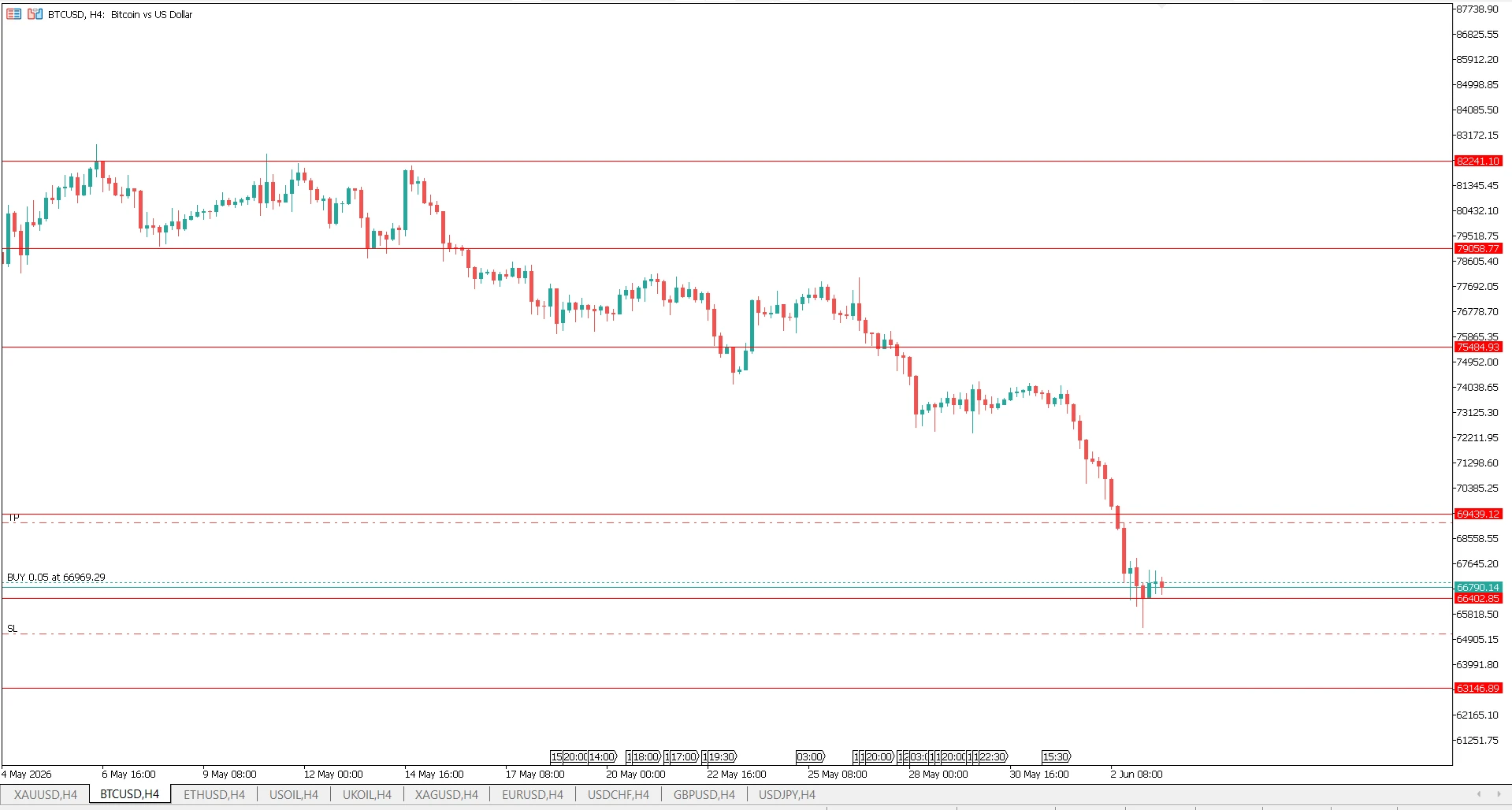
توضح لقطة الشاشة أدناه صفقة حقيقية على BTCUSD تم فتحها على منصة ميتاتريدر 5 (MT5) عبر وسيط.
في هذا المثال، حدد المتداول منطقة دعم محتملة حول 66,400–66,800 وفتح صفقة شراء عند 66,969.29. وتم وضع أمر وقف خسارة أسفل منطقة الدعم بالقرب من 65,800 للحد من المخاطر في حال استمر السوق في الانخفاض.
هدف المتداول ليس الحصول على البيتكوين أو تخزينه، بل تعتمد الصفقة بالكامل على توقع أن يرتد سعر BTCUSD من منطقة الدعم ويتحرك صعودًا.
يوضح هذا المثال أحد أبرز الفروقات بين تداول العملات الرقمية عبر وسيط واستخدام منصة تداول عملات رقمية. فالمتداول يركز على تحليل حركة السعر وإدارة المخاطر وتحقيق الأرباح من تحركات السوق، بدلًا من امتلاك البيتكوين أو تحويل العملات أو إدارة محفظة عملات رقمية.
إذا ارتفع السوق، فقد تحقق الصفقة ربحًا. وإذا استمر البيتكوين في الانخفاض ووصل إلى مستوى وقف الخسارة، فستُغلق الصفقة بخسارة محددة مسبقًا. والنتيجة تعتمد على حركة السعر، وليس على ملكية العملة الرقمية.
هل يجب أن تختار منصة تداول عملات رقمية أم وسيطًا؟
يعتمد الخيار الأفضل على هدفك.
- اختر منصة تداول عملات رقمية إذا كنت ترغب في شراء العملات الرقمية وامتلاكها وتحويلها.
- اختر وسيطًا إذا كان هدفك الأساسي هو التداول وتحقيق الأرباح بدلًا من الاحتفاظ بالعملات.
- اختر منصة تداول إذا كنت تخطط لتخزين العملات الرقمية على المدى الطويل.
- اختر وسيطًا إذا كنت تريد الوصول إلى أدوات التداول والرسوم البيانية وفئات أصول متعددة من حساب واحد.
لا يُعد أي من الخيارين أفضل بشكل مطلق. فكل منهما يخدم أغراضًا مختلفة وأنواعًا مختلفة من المشاركين في السوق.
أي خيار أفضل لمختلف أنواع المتداولين؟
نوع المتداول | منصة التداول | الوسيط |
حامل عملات رقمية طويل الأجل | ✓ | ممكن |
المتداول النشط | ممكن | ✓ |
المتداول متعدد الأصول | محدود | ✓ |
المستخدم الراغب في امتلاك العملات الرقمية | ✓ | عادةً لا |
المستخدم الذي يتجنب إدارة المحفظة | لا | ✓ |
المبتدئ الباحث عن البساطة | يعتمد على الحالة | غالبًا ✓ |
هل الوسطاء أكثر أمانًا من منصات التداول؟
نعم.
لكن الأمان يعتمد على عوامل مثل حماية الحساب وإدارة المخاطر والممارسات التشغيلية وكيفية إدارة المستخدمين لبيانات اعتمادهم الخاصة.
عند استخدام منصة تداول، يكون المستخدمون غالبًا مسؤولين عن أمان محافظهم وتحويلات عملاتهم الرقمية. لكن الاختراقات شائعة.
عند استخدام وسيط، يركز المتداولون عادةً على إدارة مخاطر التداول بدلًا من إدارة المحفظة. ويفضل بعض المتداولين الوسطاء الراسخين لأن لديهم غالبًا تاريخًا تشغيليًا طويلًا ويركزون على توفير الوصول إلى التداول بدلًا من حفظ العملات الرقمية. على سبيل المثال، تعمل NordFX منذ عام 2008 وتوفر الوصول إلى تداول العملات الرقمية عبر MT4 وMT5 دون الحاجة إلى أن يدير المتداولون محافظ العملات الرقمية الخاصة بهم.
قبل فتح حساب، من المهم تقييم سمعة الشركة وممارسات الأمان وشروط التداول والدعم المتاح.
الأخطاء الشائعة عند الاختيار بين منصة تداول ووسيط
المشكلة | السبب | كيفية التجنب |
افتراض أن كل تداول للعملات الرقمية يعني الملكية | توجد منتجات مختلفة | افهم ما إذا كنت تشتري عملات أم تتداول تحركات الأسعار |
تجاهل مسؤوليات المحفظة | يركز المستخدمون الجدد فقط على شراء العملات الرقمية | تعرّف على أمان المحفظة قبل شراء العملات |
الاختيار بناءً على الرسوم فقط | هناك عوامل أخرى مهمة | قارن الأدوات والأسواق والتنفيذ والراحة |
عدم فهم الرافعة المالية | يمكن أن تزيد الرافعة المالية من المخاطر | تعرّف على كيفية عمل الرافعة المالية قبل استخدامها |
الخلط بين الوسطاء ومنصات التداول | كلاهما يوفر الوصول إلى السوق | افهم الفروقات بين الملكية والتداول |
ملاحظة حول السوق
استنادًا إلى سلوك التداول الملحوظ على MT4 وMT5، يركز العديد من متداولي العملات الرقمية النشطين على تحركات الأسعار قصيرة الأجل بدلًا من امتلاك العملات الرقمية. ونتيجةً لذلك، غالبًا ما يُستخدم التداول عبر الوسطاء من قبل المتداولين الباحثين عن التعرض للسوق دون إدارة المحافظ أو تحويلات البلوك تشين.
الأسئلة الشائعة
هل منصة تداول العملات الرقمية هي نفسها الوسيط؟
لا. تُسهّل منصات التداول أساسًا ملكية العملات الرقمية وتحويلها، بينما يركز الوسطاء غالبًا على توفير الوصول إلى تداول تحركات أسعار العملات الرقمية.
هل يمكنني تداول العملات الرقمية دون محفظة؟
نعم. لا تتطلب العديد من منتجات تداول العملات الرقمية عبر الوسطاء من المتداولين إدارة محافظ العملات الرقمية.
أيهما أفضل للمبتدئين؟
يعتمد ذلك على الهدف. فقد يفضل الباحثون عن الملكية منصات التداول، بينما قد يفضل المهتمون بالتداول الوسطاء.
هل يمكنني تداول أسواق العملات الرقمية الصاعدة والهابطة عبر وسيط؟
تتيح العديد من منتجات الوسطاء للمتداولين المضاربة على تحركات الأسعار الصاعدة والهابطة على حد سواء.
هل MT5 منصة تداول عملات رقمية؟
لا. ميتاتريدر 5 (MT5) هو منصة تداول تُستخدم للوصول إلى الأسواق المالية عبر وسيط.
هل يمكنني تداول أصول أخرى غير العملات الرقمية عبر وسيط؟
يوفر العديد من الوسطاء الوصول إلى فئات أصول متعددة، بما في ذلك العملات والمعادن والمؤشرات والأسهم.
هل Binance منصة تداول أم وسيط؟
تُعرف Binance بشكل أساسي كمنصة تداول عملات رقمية لأنها تُسهّل شراء العملات الرقمية وبيعها وتحويلها.
هل يمكنني نقل البيتكوين من وسيط إلى محفظة؟
يعتمد ذلك على المنتج. إذا كنت تتداول عقود فروقات على العملات الرقمية، فعادةً لا توجد عملة رقمية لتحويلها لأنك لا تمتلك الأصل الأساسي.
ما الفرق بين عقد الفروقات على العملات الرقمية وامتلاك البيتكوين؟
امتلاك البيتكوين يعني الاحتفاظ بالبيتكوين الفعلي. أما عقد الفروقات على العملات الرقمية فيتيح للمتداولين المضاربة على تحركات سعر البيتكوين دون امتلاك العملة الرقمية نفسها.
لماذا يختار بعض المتداولين الوسطاء بدلًا من منصات التداول؟
يفضل العديد من المتداولين النشطين الوسطاء لأنهم يمكنهم الوصول إلى أدوات الرسوم البيانية وخيارات الرافعة المالية وفئات الأصول المتعددة ومنصات التداول مثل MT4 وMT5 دون إدارة محافظ العملات الرقمية.
أهم النقاط
- تركز منصات تداول العملات الرقمية أساسًا على ملكية العملات الرقمية وتحويلها.
- يركز الوسطاء عادةً على توفير الوصول إلى تحركات أسعار العملات الرقمية.
- تتطلب منصات التداول عادةً إدارة محفظة، بينما لا يتطلب الوسطاء ذلك غالبًا.
- يخدم التداول الفوري للعملات الرقمية وتداول عقود الفروقات عليها أغراضًا مختلفة.
- تُعد MT4 وMT5 منصات تداول تُستخدم عادةً عبر الوسطاء.
- يعتمد الخيار الأفضل على ما إذا كان هدفك امتلاك العملات الرقمية أو التداول النشط.
قراءات ذات صلة
- قاموس مصطلحات العملات الرقمية
- كيف يعمل التداول
- شرح تداول الهامش
- المراكز البيعية في عقود الفروقات على العملات الرقمية
راجعه فريق NordFX التعليمي
العودة العودة