What is overtrading?
Short answer: Overtrading is when a trader opens too many trades or trades too frequently without valid setups, usually driven by emotions rather than a clear trading plan.
Overtrading is one of the most common problems faced by retail traders at all experience levels. It often develops quietly, disguised as discipline or enthusiasm, but can gradually damage both trading performance and confidence. Understanding what overtrading is and how it affects decision-making is essential for building a sustainable trading approach.
Overtrading usually stems from psychological pressure rather than strategy flaws. By learning how it starts, how to recognize it, and how to manage it, traders can protect their capital and improve long-term consistency.
Overtrading refers to the practice of opening too many trades or trading too frequently, often without valid setups or proper risk control. It usually happens when a trader reacts emotionally to the market rather than following a structured plan. Overtrading increases transaction costs, magnifies losses, and reduces decision quality, making consistent profitability much harder to achieve.
Key points:
- Overtrading is driven more by behavior than by market conditions
- It affects both beginners and experienced traders
- Psychological pressure is a major trigger
- Risk management weakens when overtrading increases
- Long-term consistency suffers even if some trades win
What Is Overtrading?
Overtrading is the act of trading more often than your strategy or market conditions justify. This can mean placing too many trades in a single session, trading every small price movement, or increasing position sizes without a valid reason.
From a practical perspective, overtrading is not defined by a specific number of trades. A scalper may place dozens of trades per day without overtrading, while a swing trader may overtrade by opening five low-quality positions in one afternoon. The key factor is whether each trade follows predefined rules.
Overtrading often creates the illusion of productivity. Being constantly active in the market can feel like progress, even when the quality of decisions is declining. Over time, this behavior leads to fatigue, emotional decision-making, and inconsistent results.
Overtrading Explained: Risks and Implications
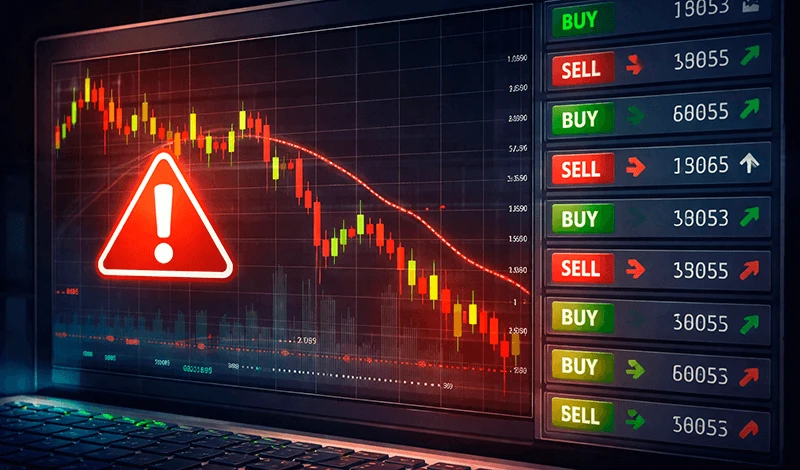
Overtrading is risky because it increases exposure without increasing edge. Each additional trade carries cost, risk, and emotional load, while the probability of success remains unchanged or even decreases.
One major implication is the erosion of trading discipline. As trade frequency rises, traders are more likely to skip analysis, ignore risk limits, and enter positions impulsively. This weakens the entire trading framework.
Another risk lies in transaction costs. Spreads, commissions, and slippage accumulate quickly when trade volume increases. Even strategies with a small statistical edge can become unprofitable when costs outweigh expected returns.
Overtrading also reduces the ability to evaluate performance accurately. When many low-quality trades are mixed with good ones, it becomes difficult to identify what actually works and what does not.
For a structured approach to market participation, many traders rely on educational material such as trading basics guide on https://nordfx.com/ and risk management overview.
Causes of overtrading
Overtrading rarely happens by accident. It usually develops from a combination of emotional, cognitive, and structural factors.
One common cause is fear of missing out. When markets move quickly, traders may feel pressured to participate in every move, even when conditions do not match their strategy.
Another cause is revenge trading. After a loss, some traders try to recover quickly by entering new trades without proper analysis. This behavior often leads to a cycle of losses and further emotional stress.
Lack of a clear trading plan is another major contributor. Without predefined entry rules, exit criteria, and risk limits, traders are more likely to take random trades based on short-term price movements.
Finally, boredom and overconfidence can also trigger overtrading. Quiet markets may tempt traders to create opportunities that are not really there, while a series of wins can lead to excessive risk-taking.
Common Overtrading Practices for Traders
Overtrading often shows up in recognizable patterns of behavior. One common practice is trading without waiting for confirmation. Traders may enter positions based on partial signals or incomplete setups.
Another pattern is increasing trade size after losses. This behavior is sometimes justified as confidence, but it usually reflects emotional pressure rather than logic.
Some traders also overtrade by switching strategies frequently. Instead of mastering one approach, they jump between indicators and systems, opening trades each time a new idea appears.
High leverage misuse is another form of overtrading. Even with a limited number of trades, excessive leverage can amplify exposure to a level that resembles constant overtrading in terms of risk.
Educational resources such as learning center can help traders understand how exposure increases with trade frequency and size.
How to Avoid Overtrading
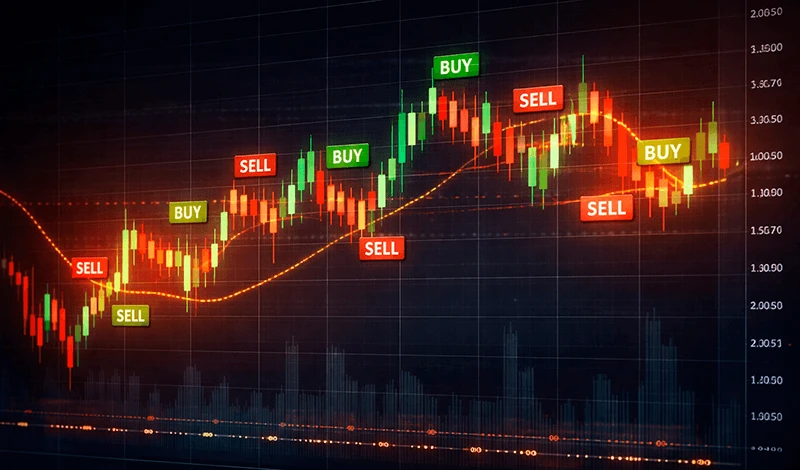
Avoiding overtrading starts with structure. The most effective way is to define strict entry criteria and trade only when all conditions are met. This removes ambiguity and reduces impulsive decisions.
Setting a daily or weekly trade limit can also help. Knowing that you have a maximum number of trades encourages selectivity and patience.
Another practical method is time-based trading. Limiting trading activity to specific sessions or hours reduces exposure to low-quality market conditions.
Maintaining a trading journal is equally important. Writing down the reason for each trade forces accountability and highlights patterns of overtrading over time.
Traders who focus on process rather than outcome tend to overtrade less.
Signs You Are Overtrading
One clear sign of overtrading is emotional fatigue. If trading feels stressful, rushed, or overwhelming, it may indicate excessive activity.
Another sign is declining trade quality. When you find yourself entering trades without full analysis or clear reasoning, overtrading is likely present.
Frequent changes to strategy parameters are also a warning signal. Constant adjustment often reflects a reaction to short-term results rather than a long-term plan.
Finally, overtrading often shows up in performance metrics. Rising transaction costs, inconsistent equity curves, and difficulty explaining losses are all indicators that trade frequency may be too high.
Psychological & Financial Consequences of Overtrading
The psychological impact of overtrading can be severe. Continuous decision-making drains mental energy, leading to poor judgment and emotional reactions.
Stress and anxiety often increase as trade frequency rises. Traders may begin to watch every price movement, amplifying emotional responses to normal market fluctuations.
Financially, overtrading leads to uneven results. Even if some trades are profitable, losses tend to be larger and more frequent due to weakened risk control.
Over time, confidence erodes. Traders may begin to doubt their strategy or skills, when the real issue is behavioral rather than technical.
Overtrading vs undertrading: what’s the difference?
Overtrading and undertrading are opposite behaviors, but both can harm performance. Overtrading involves excessive activity, while undertrading means missing valid opportunities due to hesitation or fear.
The main difference lies in execution rather than strategy. Overtraders act too often, undertraders act too rarely, and both deviate from their trading plan.
The table below highlights the key differences.
Aspect | Overtrading | Undertrading |
Trade frequency | Too high | Too low |
Emotional driver | Impulsiveness, fear, revenge | Fear, hesitation, lack of confidence |
Risk exposure | Excessive and inconsistent | Missed potential returns |
Strategy adherence | Weak | Often intact but not executed |
Typical outcome | Capital erosion | Slow growth or stagnation |
Balanced trading sits between these extremes, where trades are taken consistently and only when conditions justify them.
Overtrading: risk management
Risk management is the strongest defense against overtrading. Fixed risk per trade ensures that no single position can significantly damage the account.
Position sizing rules are especially important. When trade size is predefined, emotional impulses have less impact on exposure decisions.
Using stop-loss orders consistently also limits damage from impulsive entries. Even if a trade is unnecessary, the predefined exit prevents excessive losses.
Another useful technique is risk budgeting. Allocating a maximum risk per day or week helps prevent excessive activity during volatile periods.
How to recover from is overtrading
Recovering from overtrading starts with stopping. Taking a short break from live trading allows emotions to reset and perspective to return.
The next step is reviewing recent trades. Identifying which trades followed the plan and which did not helps isolate overtrading behavior.
Rebuilding confidence through reduced position sizes is often effective. Trading smaller allows focus on execution rather than outcomes.
Finally, refining the trading plan with clearer rules reduces the chance of relapse. Recovery is not about trading more carefully for a few days, but about changing habits permanently.
FAQs
Is overtrading always bad?
Overtrading is harmful when it reduces trade quality and increases emotional decision-making. High trade frequency itself is not the issue. The problem arises when trades are taken without a clear edge or proper risk control.
Can experienced traders overtrade?
Yes, experience does not eliminate overtrading risk. Experienced traders may overtrade due to overconfidence, market boredom, or pressure to perform. Discipline remains essential at all levels.
How many trades per day is considered overtrading?
There is no fixed number. Overtrading depends on strategy and market conditions. A trader is overtrading when trades no longer meet predefined criteria.
Does overtrading affect long-term profitability?
Yes, overtrading often reduces long-term profitability. Increased costs, emotional errors, and inconsistent execution usually outweigh any short-term gains.
Can automated trading prevent overtrading?
Automation can reduce emotional overtrading if the system follows strict rules. However, poorly designed algorithms can also overtrade if not properly controlled.
How long does it take to recover from overtrading losses?
Recovery time varies. Financial recovery depends on drawdown size, while psychological recovery depends on mindset. Consistent discipline is more important than speed.
Is overtrading more common in certain markets?
Overtrading is common in fast-moving markets such as forex, indices, and crypto. High volatility and constant price movement increase temptation, making discipline especially important.
Meet the Author
Vanessa Polson is a marketing manager at NordFX with over twelve years of experience in online marketing within the financial services industry. She has developed and executed data-driven campaigns across search, social, and display channels in in-house environments. Her work focuses on translating complex financial products and trading tools into clear, practical educational content, giving her a broad and well-rounded view of the global trading landscape.
Connect with Vanessa on LinkedIn.
بازگشت بازگشت